Blog
Boat Name Stickers Australia: How to Choose the Right Boat Name Decals
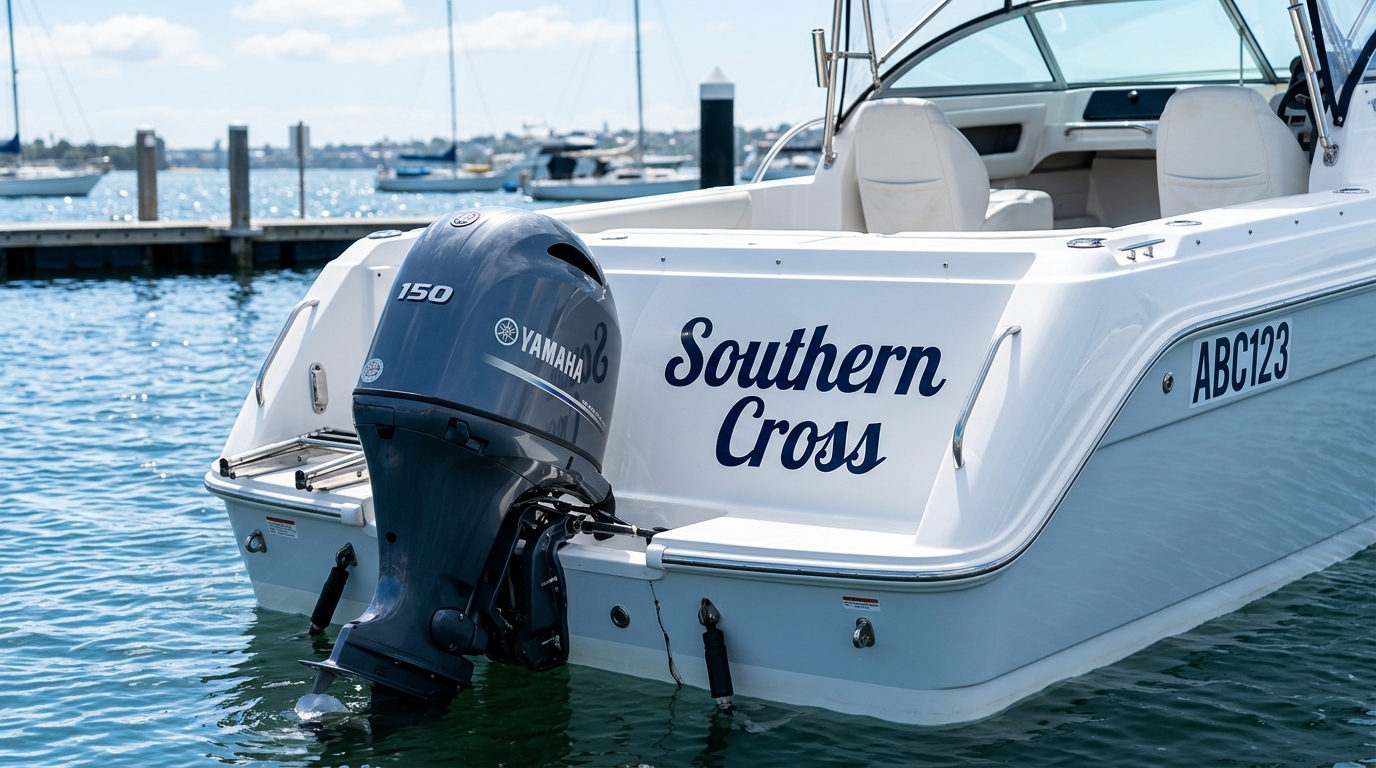
Naming your boat is the fun part. Getting the boat name stickers right — the size, the font, the colour and the placement — is where most owners come unstuck. A name that looked perfect on a phone screen can end up too small to read from the next pen, or too low on the transom and permanently sitting in the waterline scum.
This guide walks through how to choose boat name decals that suit your hull, survive Australian conditions, and still look sharp three summers from now. Whether you're lettering a 4.2m tinny at Lake Macquarie or a 7m fibreglass half-cab on the Gold Coast, the same handful of decisions make or break the finished job.
Start with where the name is going
Before you think about fonts, decide on the panel. On most Australian trailer boats and cruisers, the name goes in one of three places:
- The transom — the classic spot, usually centred above the waterline and below the gunwale line.
- The bow quarters — one name per side, angled slightly to follow the sheer line.
- The cabin sides or hard top — common on larger fibreglass boats where the transom is crowded with an outboard bracket and boarding ladder.
Measure the flattest, cleanest run of gel coat or paint you have. Avoid rivet lines, chines, rubbing strakes and pressed strengthening ribs where you can — vinyl will conform to a gentle curve, but sharp edges and deep creases are where lifting starts.
Also leave clear space for your registration numbers. Your hull rego is a legal display and shouldn't be crowded, overlapped or obscured by decorative lettering. If you're planning both at once, our notes on where to place boat registration numbers are worth a read before you commit to a layout.
Getting the character height right
There's no legal minimum size for a boat's name in most Australian jurisdictions — that requirement applies to registration numbers. But there is a practical minimum, and it's bigger than most people guess.
As a rough working guide for readability from the water:
- Tinnies and boats under 4m — 50mm to 75mm character height
- 4m to 6m runabouts and half-cabs — 75mm to 100mm
- 6m to 8m cruisers and centre consoles — 100mm to 150mm
- Larger vessels and flybridge boats — 150mm and up
The other half of the equation is total length. Measure the available panel width, then subtract at least 15% so the name isn't jammed hard against the edges. A short name like Reel Deal can go big; something like Southern Cross Charters will need a smaller height or a two-line stacked layout to fit. Our boat name designer shows the finished dimensions live as you type, which saves a lot of guesswork with a tape measure and a scrap of cardboard.
Choosing a font that actually reads on water
Fonts behave differently at distance and on a moving hull. A few practical rules from years of marine lettering:
Bold and clean beats fine and fancy
Thin, delicate scripts look elegant on a screen but disappear at 30 metres, especially against a white hull in glare. Heavier strokes hold up far better in bright Australian light.
Watch the connections in script fonts
Cursive and italic styles read beautifully on cabin sides and larger transoms, but very thin joining strokes are the first thing to lift after a high-pressure washdown. If you love a script, choose one with reasonably thick joins.
Match the font to the boat's character
Block and condensed sans-serif fonts suit plate-alloy fishing boats and centre consoles. Classic serif and script styles sit better on timber, older fibreglass cruisers and displacement hulls. Nautical slab styles work well on tenders and dinghies.
Mind the mixed case
ALL CAPS is punchy and easy to read but eats horizontal space. Title Case is more relaxed and usually fits more characters at the same visual weight. Try both before deciding.
If you're still deciding on a name entirely, the boat name ideas generator is a good way to shake loose a shortlist before you commit vinyl to gel coat.
Colour and contrast on Australian hulls
Contrast is what makes lettering legible. On a white or light hull, the safe performers are gloss black, dark navy, deep red and burgundy. On dark blue, charcoal or black hulls, white, silver metallic and gold read best.
A few things worth knowing before you pick:
- Gloss vs matte — gloss black is the most popular finish on white hulls and cleans up easily. Matte black gives a modern, understated look but shows salt residue and marks more readily.
- Metallics — silver and gold metallic look excellent on dark hulls and pair nicely with existing chrome or polished stainless fittings.
- Reflective — mainly used for registration numbers and safety visibility, but a reflective name can be a nice touch on a boat that's often moored or fishing at night.
- Mid-tone colours on mid-tone hulls — the most common mistake. Grey on light blue, or navy on dark green, simply won't pop.
Hold a colour sample against the hull in direct sunlight, not in a shed. Our guide to choosing boat sticker colours goes deeper into contrast, UV fade behaviour and pairing your name with your rego numbers.
Why marine vinyl matters more than the design
You can nail the font and the colour and still be peeling decals off in eighteen months if the material isn't up to it. Australian boating is genuinely hard on vinyl — constant UV, saltwater immersion, trailer speeds, and regular washdowns with a pressure wand.
Our custom boat name stickers are cut from premium German-engineered ORAFOL marine vinyl, the same material we use for registration numbers. It's built to hold colour and adhesion through UV exposure and salt, rather than the sign-shop calendared vinyl that goes chalky and brittle after a couple of summers.
Every name comes pre-spaced on application tape as a single piece — not a bag of loose letters you have to align yourself — with a squeegee and instructions included. Names start from $29.99, and if you want the same look extended across boarding platforms, hatches or trailer panels, browse the wider vinyl boat lettering range.
Applying your boat name decals
Application is straightforward if you don't rush it. The short version:
- Wash the panel with detergent, rinse and dry completely. Follow with an isopropyl alcohol wipe to strip wax, polish and silicone residue.
- Position the decal with masking tape and step back at least five metres to check it's level against the sheer line, not just the deck.
- Work from the centre outward with the squeegee, applying firm overlapping strokes.
- Let it sit before removing the application tape, then peel back slowly at a low angle.
- Keep it out of the water and away from pressure washing for the first 24 to 48 hours while the adhesive cures.
Ideal conditions are 15–25°C, out of direct sun and out of the wind. A hot hull in the middle of a Queensland afternoon makes the adhesive grab instantly and unforgivingly. The step-by-step method in our boat sticker application guide applies equally to names and rego numbers.
Pairing your name with compliant rego numbers
A boat name is decorative; your registration numbers are not. Every state and territory sets its own rules for character height, colour contrast and placement — boat hull numbers are generally a minimum of 150mm high, and PWC numbers 100mm, but the detail varies.
Plenty of owners order both together so the finish and colour match across the hull. If that's you, take a look at our custom boat stickers range, which covers rego numbers, names, jet ski decals, outline styles and tender markings in the same marine vinyl.
Rules vary by state and territory. Always confirm current requirements with your state maritime authority. We manufacture compliant-style decals; final compliance depends on correct size, placement, contrast and display on the vessel.
Frequently asked questions
Do I legally need a name on my boat in Australia?
For recreational vessels, no — a displayed name isn't a general legal requirement. What is required is your registration number, correctly sized and displayed. A name is a personal choice, though it makes life easier on the radio and around a busy boat ramp.
How long do boat name stickers last?
With quality marine vinyl and a properly prepared surface, expect years of service rather than months. Longevity depends heavily on UV exposure, whether the boat is stored under cover, and how often the decal is hit directly with a pressure washer.
Can I put a name on an aluminium tinny?
Yes. Vinyl bonds well to smooth painted or bare aluminium. The key is choosing a panel that avoids rivets and pressed ribs, and prepping thoroughly — bare alloy often carries oxidation and polish residue that needs removing first.
Should I get one name or a pair?
If the name is going on the transom, one is usually enough. For bow quarters or cabin sides, order a pair so both sides match — and check whether you want them mirrored to read correctly from each side.
What about inflatables and RIBs?
Hypalon and PVC tubes need a different approach to hard hulls. If you're lettering an inflatable or the fibreglass hull of a RIB, read our guidance on inflatable boat rego stickers before ordering.
Get the look right the first time
Choose a bold, legible font, size it for the panel rather than the phone screen, pick a colour with genuine contrast against your hull, and use vinyl built for salt and sun. Get those four right and your name will still look sharp long after the boat's had a few seasons under it.
When you're ready, jump into the boat name designer to preview fonts, colours and finished sizes on screen, then order with confidence. Dispatch is within 24–48 hours, with 4–6 days to metro addresses and 6–10 days regional, and express is available if the boat's booked in for a weekend on the water.